
Most AI courses for developers teach you how to build a demo. Far fewer show you how to turn that skill into a paid client offer. The options below are organized by technical focus, format, and fit for freelance work. Below are five named courses worth your time, with Sean No Code first for builders who need the business layer too.
1. Sean No Code, build client-ready AI automations
Sean No Code is an AI automations course for freelance developers, small agency owners, indie founders, and technical workers who want paid client work.
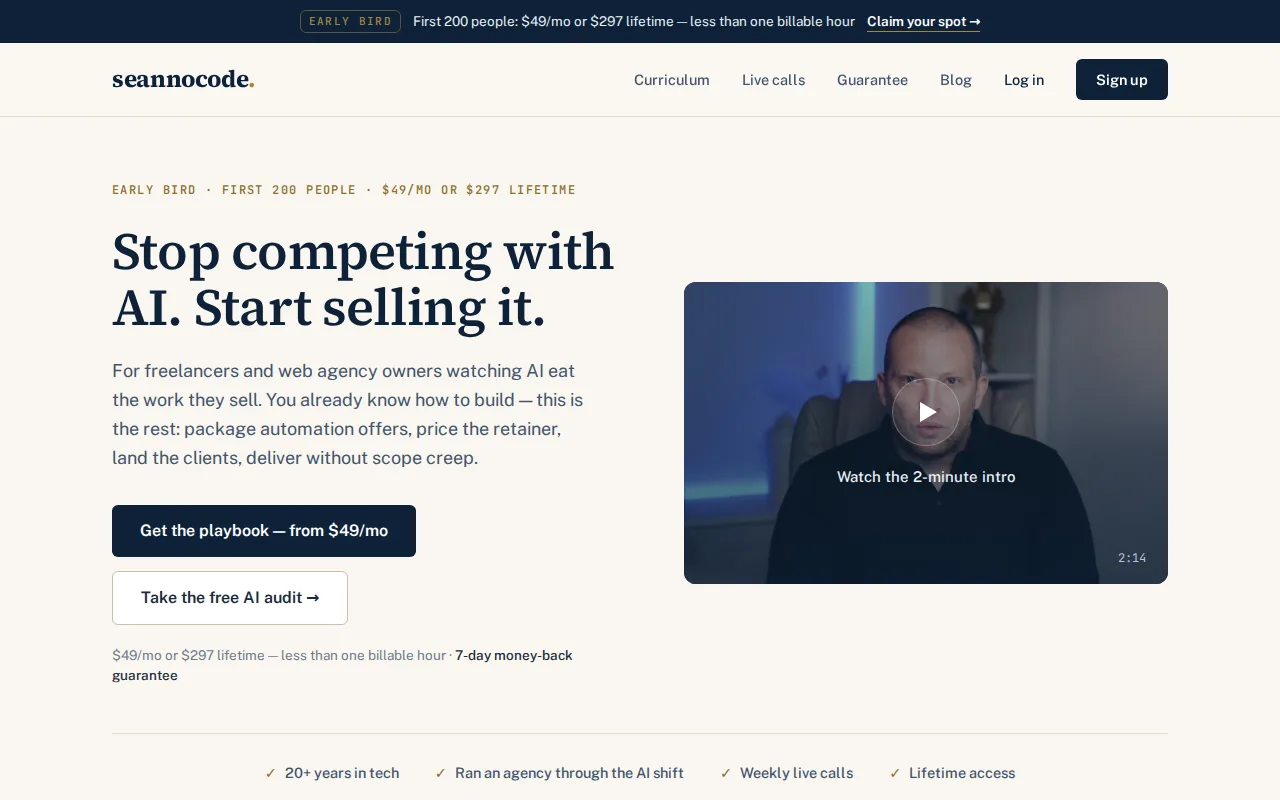
Most developers already know how to build. The gap is what comes next. You still need a clear offer, a price that leaves room for profit, a discovery call that finds the real problem, and a handoff a client can understand.
Sean No Code puts those tasks beside the automation work. You learn how to build an AI automation business while learning the client side of delivery. That makes it a strong fit for Marcus, the freelance developer whose old web work is getting squeezed, and Dan, the employed technical worker testing a move into consulting.
The useful test is simple: can you explain what the automation does, who pays for it, and what happens when it fails? A course that covers only code leaves those questions to you. Sean No Code focuses on the business layer around building and selling automation offers.
That doesn’t mean it replaces technical practice. You still need to test inputs, set review points, and define what the system should do when a model gives a poor answer. But you won’t finish with a polished demo and no plan for getting it in front of a buyer.
Start with the related AI automation bootcamp options for 2026 if you want to compare course formats before choosing a path. The caveat is clear: this option is built around client work, not deep model research.
2. Scrimba: Intro to AI Engineering, practical AI application development
Scrimba’s Intro to AI Engineering is a good fit for web developers who want to learn AI application development through a self-paced interactive video format.
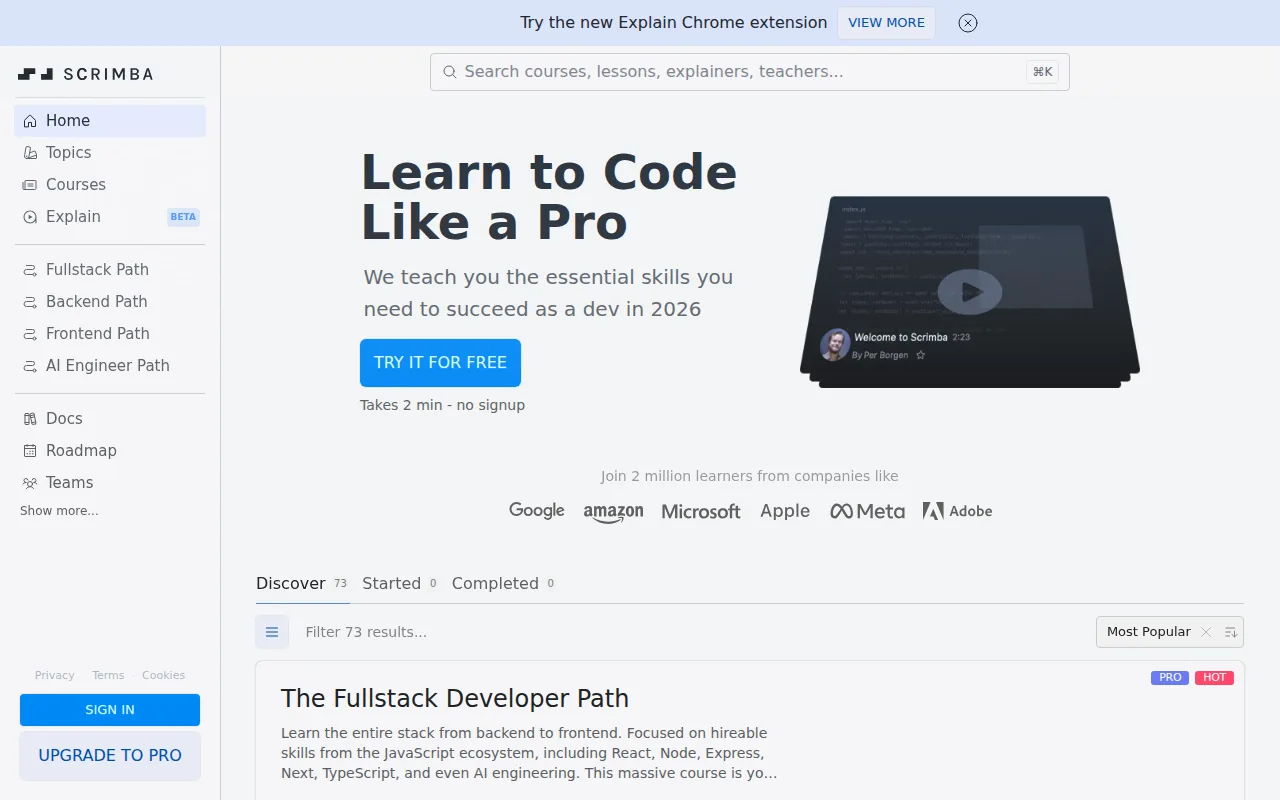
The course focuses on building AI applications. That makes it relevant to developers who want a practical introduction to adding AI work to their existing web development skills, without treating the course as a broad survey of every part of AI engineering.
The delivery format is the main draw. Scrimba uses interactive video lessons called scrims. You can pause the screencast and edit the instructor’s code directly in the browser. That gives you a way to work with the examples instead of only watching the lesson.
For a web developer, the browser-based workflow is familiar. You can move through the material at your own pace, then edit the code in the same environment where the lesson is presented. The format keeps the focus on AI application development and the work needed to build with it.
This is a narrower option than a course aimed at every part of machine learning. Its focus is AI application development, with a delivery format designed for hands-on interaction. That makes the fit clearer for web developers choosing a first AI engineering course.
The self-paced structure can fit around client work. You can stop between lessons and return when you have time, while the interactive scrim format gives you a direct place to edit the code. Developers looking for a different focus may need another course beside it.
Use this option when you want a web-development-oriented introduction to AI application development. Pair it with a business-focused course such as Sean No Code if your next goal is selling the work.
For the technical side, review this background resource on large language models.
3. Full Stack Deep Learning: LLM Bootcamp, production and LLMOps depth
Full Stack Deep Learning: LLM Bootcamp fits product-minded engineers who care about what happens after an AI app leaves the demo stage.
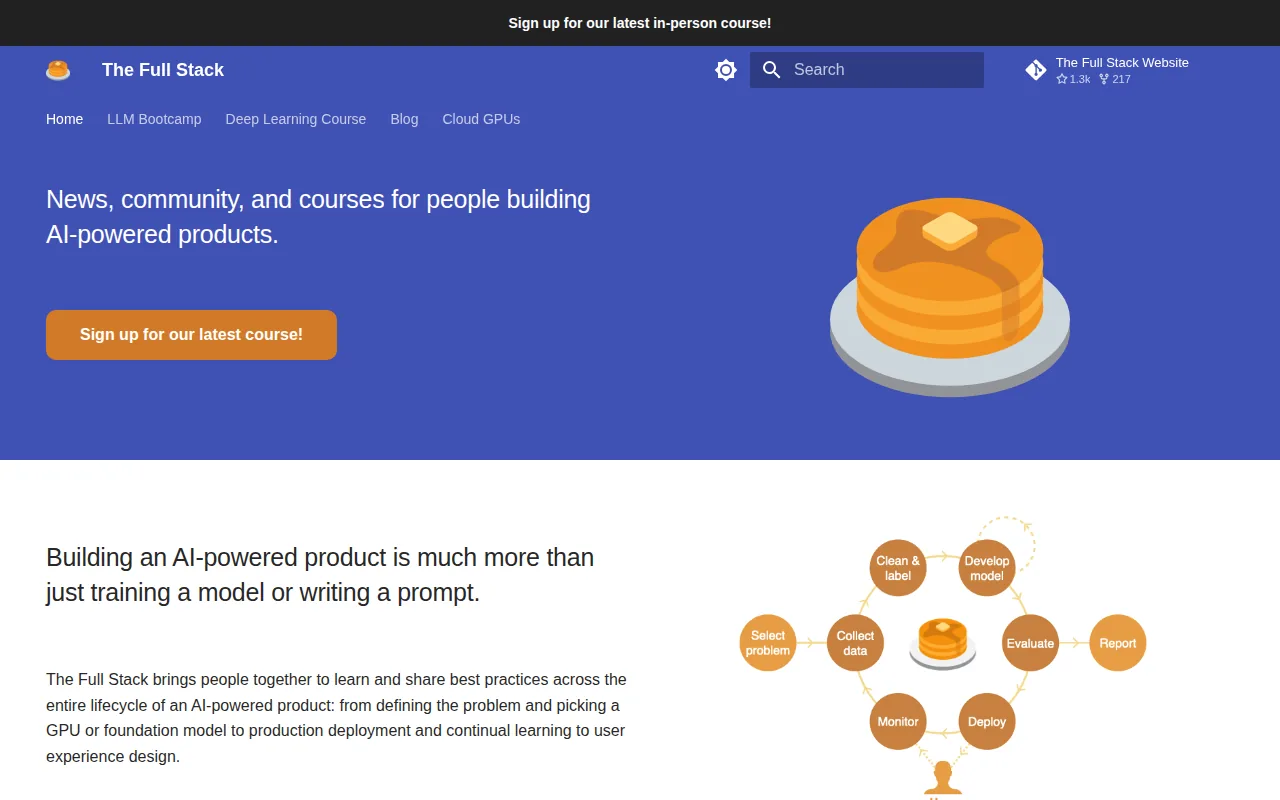
Many beginner courses stop at the prompt and response. This bootcamp spends more time on cost management, latency, user experience, prompt engineering, and LLMOps. LLMOps means the work needed to test, monitor, update, and run an LLM system after launch.
That focus changes the questions you ask. Can the app answer within an acceptable wait time? What happens when a user sends a huge document? How will you spot a bad answer? Which part of the workflow should a person review?
Those questions matter in client projects. A sales team may accept a slow internal prototype. They won’t accept one that gives the wrong quote or drops a lead without a trace. Production work needs logs, limits, fallback rules, and a way to review results.
The course is delivered as recorded video, so it gives you flexibility. It also assumes some Python and machine learning knowledge. New developers may understand the words without having enough context to apply them.
Some lessons reflect older tooling, so don’t treat every framework example as current. The lasting value is the operating mindset. Learn the design ideas, then check current documentation before using a tool in a paid build.
The course is a strong technical follow-up to a client acquisition program. It won’t teach you how to price an automation offer or run a discovery call. That gap matters if income, rather than a portfolio alone, is your goal.
A useful production rule is to measure the system before you polish the interface. The retrieval-augmented generation concept helps clarify why outside documents can change an LLM app’s behavior without retraining the model.
4. Hugging Face LLM course, open-source models and fine-tuning
The Hugging Face LLM course is for developers who want to work with open-source models and the Hugging Face ecosystem.
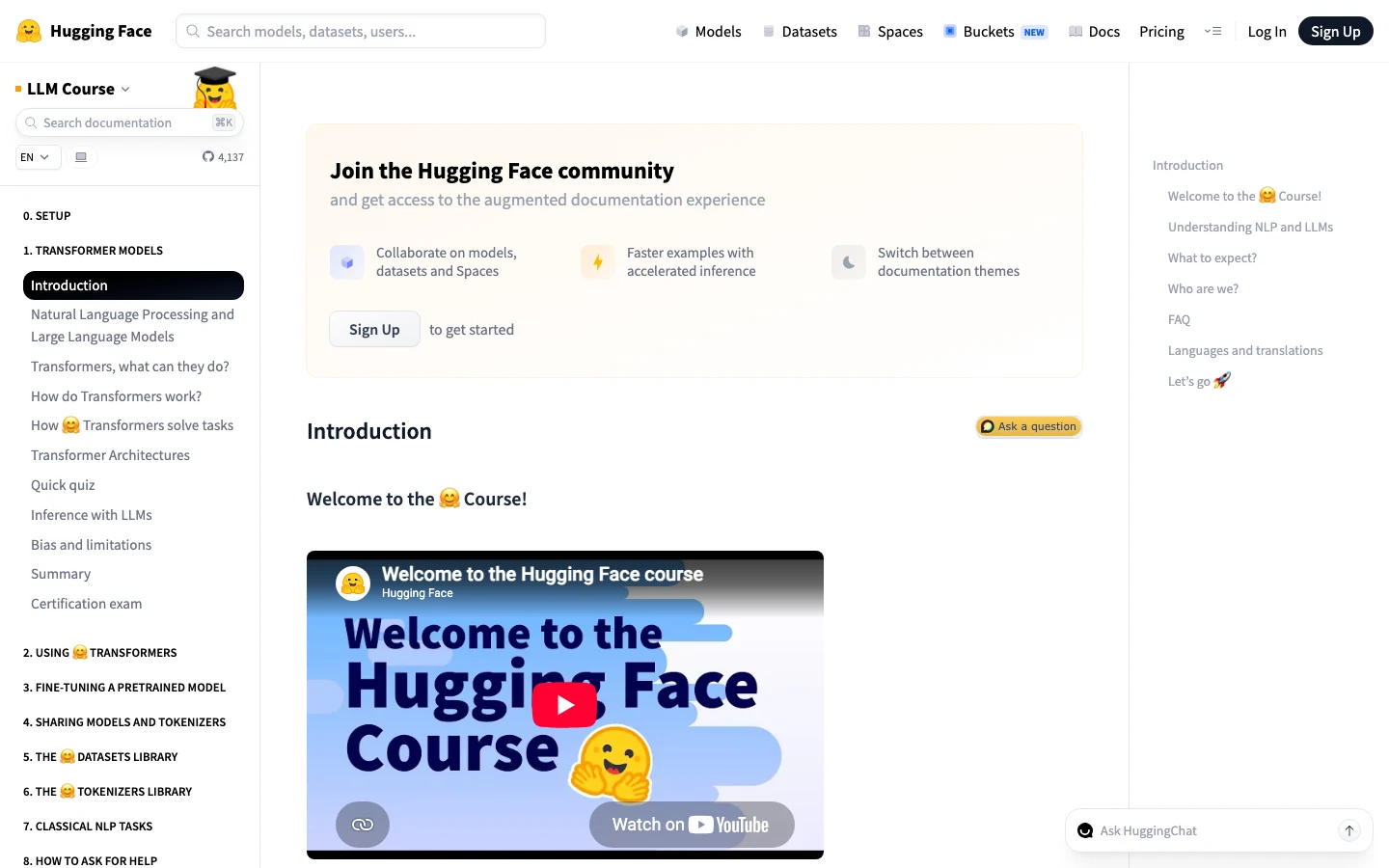
The course covers tokenization, a shared model hub, core natural language processing ideas, and model deployment. It uses written lessons with runnable notebooks, so you can change code while you learn. That suits developers who prefer reading a clear explanation, then testing the idea in a real environment.
Its strength is the model workflow. You get closer to the parts that sit underneath an AI app, including how text becomes tokens and how models move through a shared ecosystem. This makes it useful when an API-only course feels too shallow.
Fine-tuning is also a better fit for this course than in a basic prompt course. You can study how an open model is adapted for a task, then think through whether fine-tuning is even the right answer. In many client projects, better data, retrieval, or review rules may solve the issue with less cost.
The course is free, but free still has a cost. You need time, self-direction, and enough Python knowledge to debug a notebook when it stops working. There are no structured deadlines pushing you toward a finished client offer.
It also doesn’t focus on sales, pricing, proposals, or client handoff. A developer can finish with stronger model skills and still struggle to explain the business value to a buyer.
Choose it when your work needs open-source model depth. If you need your first paid automation project, put this beside a course that teaches the commercial side.
5. AI Automation with n8n, workflow automation for client projects
AI Automation with n8n is aimed at developers who want to connect AI steps with business workflows.
Workflow tools are useful when a client has work spread across several systems. A request may arrive through a form. Someone may need to classify it, pull related data, draft a response, and send the result for human review. The value comes from the full flow, not one clever prompt.
That makes n8n-style training relevant to client projects. You need to think about triggers, data passing, errors, approval points, and what gets stored. A good workflow has a clear owner. It also has a safe stop when the input doesn’t match the expected shape.
One community discussion about AI agent work shows the kind of demand developers see around integrating and managing agents for client projects. That doesn’t prove a job or income outcome. It does show why workflow skills need to include maintenance, not only setup.
The course’s narrow focus is also its limit. It won’t give you the same model depth as Hugging Face or the same production lens as Full Stack Deep Learning. And it may leave you to work out your offer, scope, and client sales process.
Use it when you already understand the business problem and need to build the workflow. If you still need help finding a buyer, Sean No Code is the more direct starting point.
Check the current product scope before you build a client proposal around it.
AI courses for developers compared
The right course depends on the gap you need to close. Technical depth, delivery format, and client readiness are different buying decisions.
Our review sample found wide variation in course length and format. Self-paced video was common, while workshops and bootcamps took a smaller share. Don’t buy based on hours alone. Buy based on the work you need to show after the course.
If you need to compare business-focused routes, the guide to AI consultant certification options adds another useful filter: can the training help you explain and sell the work?
FAQ about AI courses for developers
What are the best AI courses for developers?
The right AI course depends on your goal. Sean No Code fits developers who want to build automations and find a first paid client. Scrimba fits JavaScript developers. Full Stack Deep Learning fits production-minded engineers. Hugging Face fits open-source model work. n8n fits workflow automation.
Which AI course is best for getting freelance clients?
Sean No Code is the clearest fit for freelance client work because its focus includes the business side of AI automation. You need more than code for a first contract. You need a narrow offer, a useful proposal, a price, and a plan for delivery. Technical courses can support that work, but they usually don’t replace it.
Can web developers learn AI without Python?
Yes, web developers can start with JavaScript-based AI courses. A practical JavaScript-focused AI engineering course can suit web developers who want to build generative AI features, agents, and RAG applications. Python becomes more important for machine learning workflows, open-source model work, and many research-focused paths. Start with the language that lets you build and test fastest.
Are free AI courses useful for developers?
Free AI courses can be useful when they include code you can run and change. The Hugging Face LLM course is a strong example for open-source model learning. Free courses still require time and discipline. They also may not include feedback, deadlines, sales training, or help with turning a project into a client offer.
What should developers build after an AI course?
Build one narrow workflow tied to a business task. A support triage tool, document review flow, or lead qualification assistant can show more than a generic chatbot. Add a human review step and write down failure cases. Then explain who would pay for the workflow and what part of their work it changes.
Conclusion
Choose Sean No Code if your goal is to turn existing technical skill into a paid AI automation offer. Start by writing down one slow client workflow, then use the course to shape the build, scope, and sales message. If you need deeper model or production skills later, add Hugging Face, Scrimba, or Full Stack Deep Learning as focused technical study.